Tuesday, 28 September 2021

Still there.

Shortly after discovering a specimen of Sand Ivory (Berchemia sp nov) right on my door step, I sent Titus the drone aloft to check a particularly thick patch of forest and on his return took this shot of the camp.  Soon after landing I had just about got back to the caravan when there was a mighty crack and down came a massive branch from a dead tree. Miraculously it lodged in a smaller tree right above the Beast or it would have done some serious damage.  So there it was suspended like the sword of Damocles while I frantically dropped the awning and moved the Beast out of the way. With the assistance of a couple staff members, we managed to dislodge it and clear up the prickly mess after it had crashed to earth.


One of my favourite spots was at Bundu Camp with it's superb view over False Bay and once again Titus was co-opted to get a panoramic vista.


While enjoying a sundowner, a flock of great white pelicans soared overhead looking like a squadron of war era Short Sunderlands.


Another evening was spent having a braai in the company of Dave and Gill, a couple of fellow campers.  We chose the rustic campsite at Dinizulu Dam as it was a weeknight and the place was deserted.......

.......apart from Paws, their very realistic toy leopard who is an astonishingly effective monkey deterrent and.....................


...................a fair sized pair of these fellows.


Now this is an amazing co-incidence, as I'm sitting here in the Turner's garden writing this screed, one of these is calling in the tree right above me! It is of course the enviably beautiful Narina trogon  whose picture I captured in Bonamanzi about 5 weeks ago along with.......


............... a water thick-knee whose enormous eyes assist tremendously in finding prey at night when it is out foraging.  Daylight is spent drowsing in the shade of a tree until some impertinent photographer pitches up


An early perambulation near the camp resulted in an encounter with the three little pigs.....plus one.


A call that sounds like three blind mice heralded the arrival of a tiny, male chin-spot batis......


..............and after endless attempts, finally a reasonable picture of a gorgeous bush-shrike and is it ever?


Even though they are extremely vocal, this is the sort of dense habitat that they choose to produce their distinctive kong kong koweet call.  I guess if you are sporting kaleidoscopic colours it's probably wise to keep a low profile.


Of the many acacia species in the area one of the most attractive has to be the fever tree Vachellia xanathophloea and particularly so when it's greenish-yellow bark is highlighted by the evening sun.  It's name arose from the mistaken belief that it's sickly looking, flaky, yellow outer bark caused malaria. It was only centuries later when the real culprit was identified, mosquitoes are prevalent in the swampy areas that are the trees preferred habitat.


Might have mentioned this before but the behaviour is so unlike any other antelope as to border on the bizarre.  When a pair of horny nyala males decide to have it out they never resort to vulgar battering but take a much more refined approach.  Raising the white mane and fluffing their tail they perform a ritualistic, exaggeratedly stately walk-by, like a pair of dandies trying to outdo each other at a ball.  Most amusing to watch.


A lunch with another couple, who had been at Bonamanzi for a month then moved to Cape Vidal, allowed a postprandial drive around the adjacent Lake Bangazi.......


................where hippos lay strewn carelessly on sandbanks left and right....................


..............and it provided a most welcome sighting in the form of a collared pratincole, an uncommon intra-African migrant that breeds locally if conditions are favourable - which, judging their numbers, were.


Back at the main gate to Bonamanzi the extravagant green of the Splendid Thorn Vachellia robusta indicated that spring had indeed sprung.


It's unfortunate that this picture doesn't really do justice to this wildly colourful purple-crested turaco (lourie for us oldtimers!)


I was crashing through the forest in search of illusive berchemias when I heard the insect-like burping of an African broadbill. Though slightly smaller than a sparrow and not exactly exotic, he performs a display that instantly endears him to anyone fortunate enough to see it.  It involves flying from his perch in a flat circle while emitting an amazing ratcheting buzz and he lands back where he took off, looking extremely pleased with himself.


And when he turns to check if he might have impressed a lady, you can see where the name comes from.


Another afternoon visit to Dinizulu and another glorious sunset...................


.............with a female broad-billed weaver showing the vice-like beak used to crack the most resistant seeds....


........and a little egret searching for supper.


The drive home featured a very brief encounter with a small herd who then silently disappeared into the forest.


More evidence of spring in the form of a Natal plane Ochna natalita in profuse bloom...........


..........a tiny long-billed crombec whose tail is so short as to appear non-existent - apologies for the photo but the blighter was hyperactive........


..............and a magnificent crowned hornbill positively glowing in the sunlight.


As I've mentioned a couple of times a lot of my time here has been spent in search of these rare berchemias, which are very unique and easily identified. This is B4, the first one that I found on a previous visit and it clearly shows the unusual bark that starts out smooth, then becomes deeply creased and light grey as it ages and finally sloughs off from the base to reveal a much darker flaky bark below.  


The leaves are a bright yellowy green with distinct herring-bone venation, indented above and raised below.


When I found B21, the youngest yet, a couple of fellow campers wanted to see it hence.....


Sunday, 29 August 2021

Bonamanzi bonus


Drove down the Hluhluwe River one morning and disturbed a roost of at least 20 black-crowned night herons one of whom perched nearby and proceeded to do it's morning exercises.........


.....which very soon proved too much for him!


These birds are nocturnal and this youngster appeared to be quite miffed about the rude awakening.


A family of wattled lapwings were also rather agitated with the intrusion and let me know all about their concerns with loud calls.


Another evening drive ended at Dinizulu Dam where one of the ubiquitous nyala bulls slaked his thirst......


.......and a juvenile squacco heron peered anxiously at something airbourne, though I certainly couldn't see anything.


On one of my daily walks through the forest I came across this pretty fungus which I presumed was bi-coloured until a closer inspection revealed a fallen leaf in the centre.  

Overhead a small party of yellow white-eyes were busy gleaning insects.................

.......................while an emerald spotted wood-dove told the world his problems.  According to the Zulus these little chaps say; "My father is dead, my mother is dead, all my children are dead, oh,oh,oh,oh."  Truly a mournful ditty.


Since I arrived, have been trying to get a decent picture of the crested guineafowls as their plumage is quite superb - in the sunlight.  You'd think they'd oblige just once!


Went out for an afternoon drive with a friend Agatha and not 200 m from the camp saw fresh prints left by a large pachyderm, so stopped and got out to see which way he was headed.  Next thing Agatha is saying there he is and I looked up to see an enormous bottom disappearing along a path that lead to the pool.  Leaping back into the bakkie we nipped around to the parking area where we could see him through the slats of a boma.  Agatha crept forward and managed to get a couple of pics and a short video of Baba in all his glory.


That's not his only source of refreshment though as he regularly pulls out taps and with a quick tug, separates the stand pipe from the plastic feed and voila instant spring!


This one is on site 6 about 30 m from my caravan and has been temporarily repaired , but not much can be done about the tree on the same stand.


Out on a drive with friends we came across a family of these captivating white helmet-shrikes who look permanently startled.  They are always in groups of up to 20 individuals and maintain contact with their fascinating whirring calls.


At a small pan on the way to the river a female (with the double breast band) pied kingfisher was intent on getting dinner......


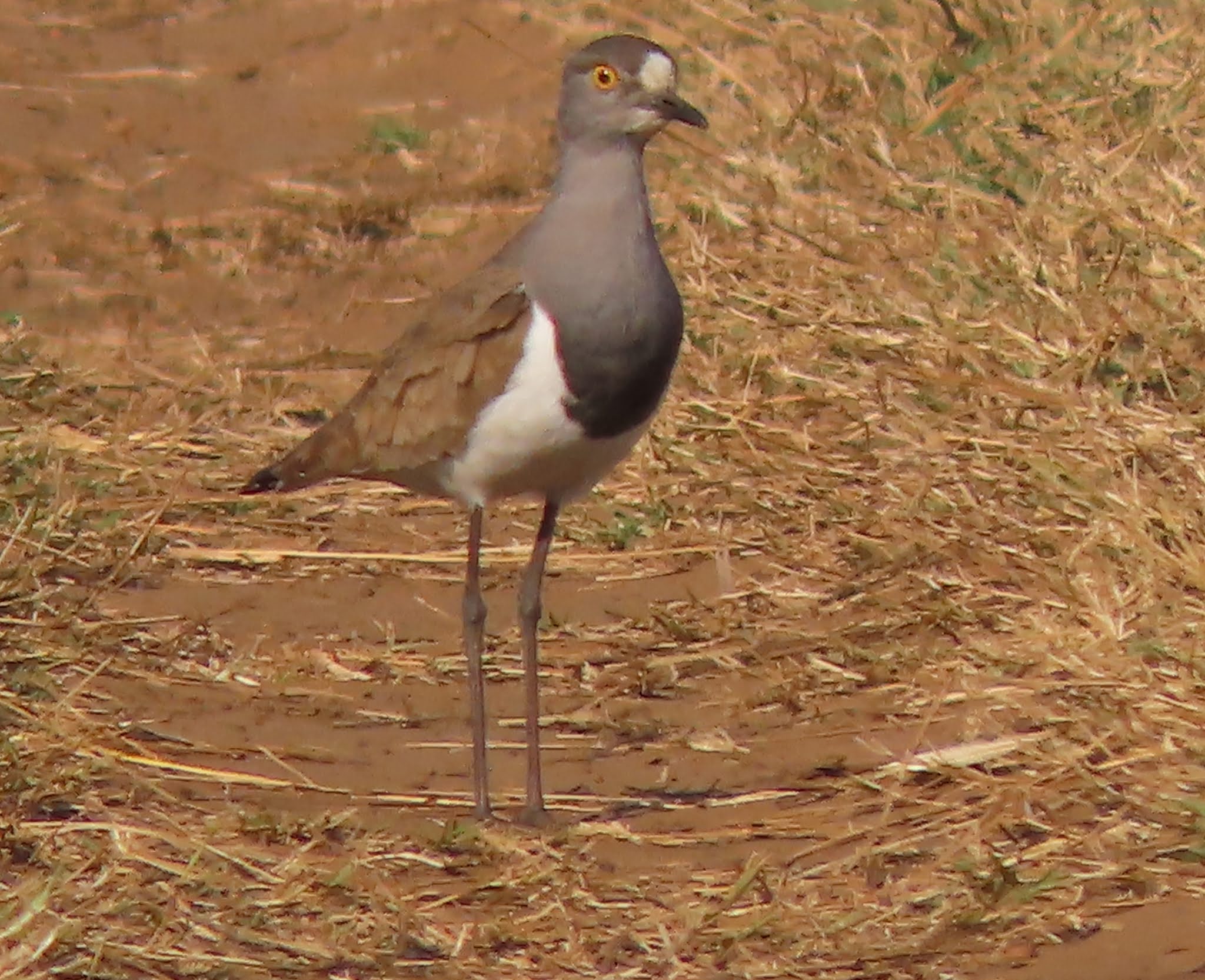
.................and opposite her on a close cropped grass area a pair of Senegal lapwings foraged on straw-like legs......


........a little further on was a small herd of buffalo with red-billed oxpeckers in attendance.


The banks of the Hluhluwe River contain some really large sycamores Ficus sycamorus and their light bark makes them stand out in the late afternoon.


The obligatory sundowner stop provided a spectacular African scene........


...........while overhead a group of stately yellow-billed storks made their way to a roost.


There is a quarry near the river and Agatha, who is a fossil addict, nearly blew a gasket when she found out that they were digging up ammonites and using them to fill potholes.  These nautilus-type creatures were around 250 million odd years ago and the reception area is home to some striking examples.


A couple of nights later at a lookout with views of False Bay, what was apparently a super moon was unfortunately only visible after it had cleared a cloud bank.


There are a couple of large spotted genets that visit regularly hoping for handouts but try as I might my camera just wont co-operate when in flash mode, so here's a rather poor shot using a phone and available light.  Will keep trying!


Often end up in a favourite spot on the banks of Dinizulu Dam and on a day without a breath of wind.....


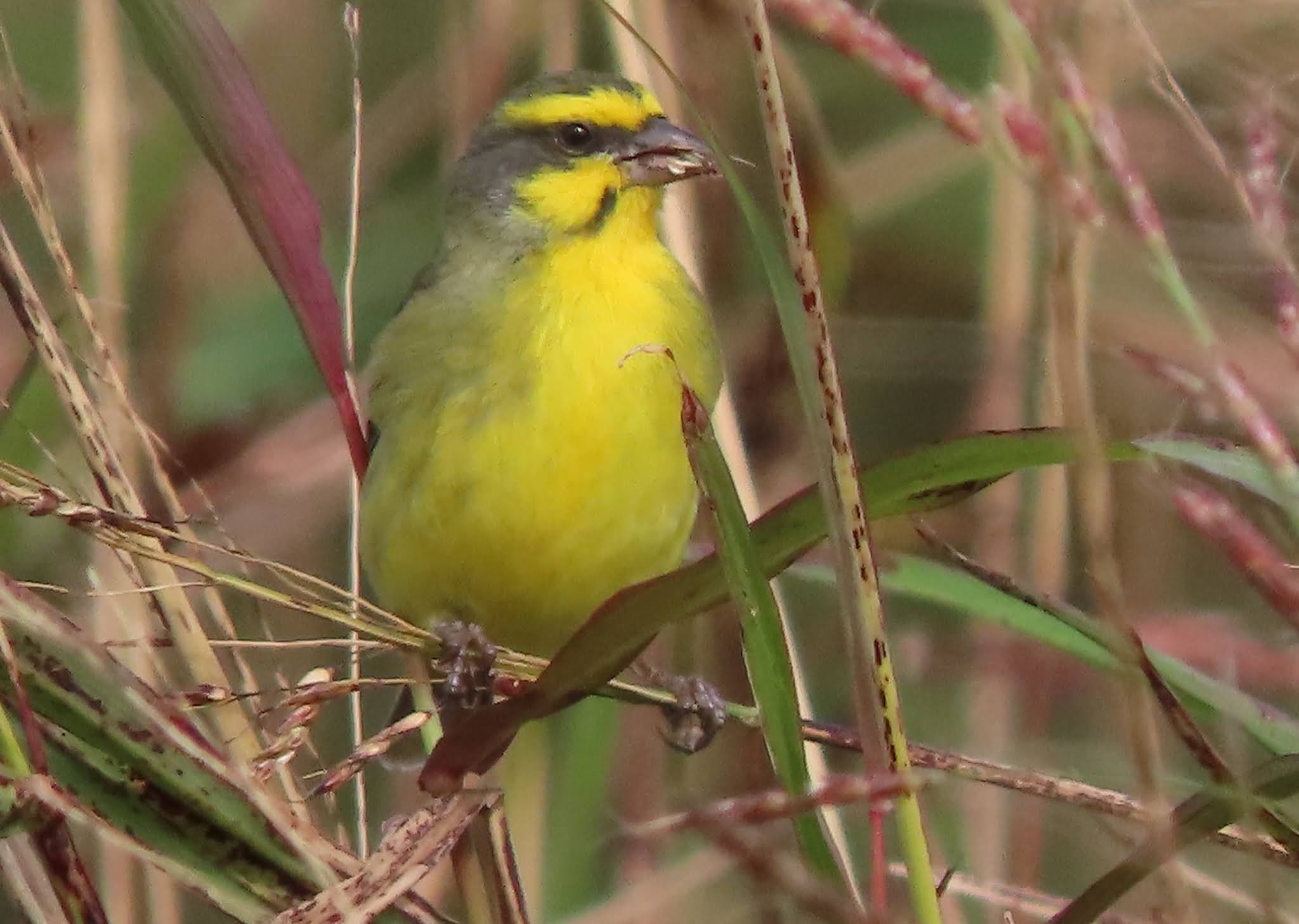
In the other direction yellow-fronted canaries were feasting on grass seeds.


One morning on an early perambulation, I heard the very distinctive tink, tink, tink start up call of a green malkoa and was delighted to get some good shots of this otherwise extremely reticent species.


The same walk provided the opportunity for a perfect portrait of a tiny purple-banded sunbird........


.........and about 100 m from the camp really fresh leopard tracks in the slightly moist sand.


A trip into St Lucia to get laundry done provided the opportunity to visit the extensive forest on the banks of the lagoon and an indignant chittering sound allowed me to locate the beautiful and rather rare red squirrel.


Very shortly thereafter an insistent, single note ponk brought me within range of a pair of Woodward's batis, first the male........


....................and the the female.  Absolutely amazing as I've only ever seen them on three previous occasions.